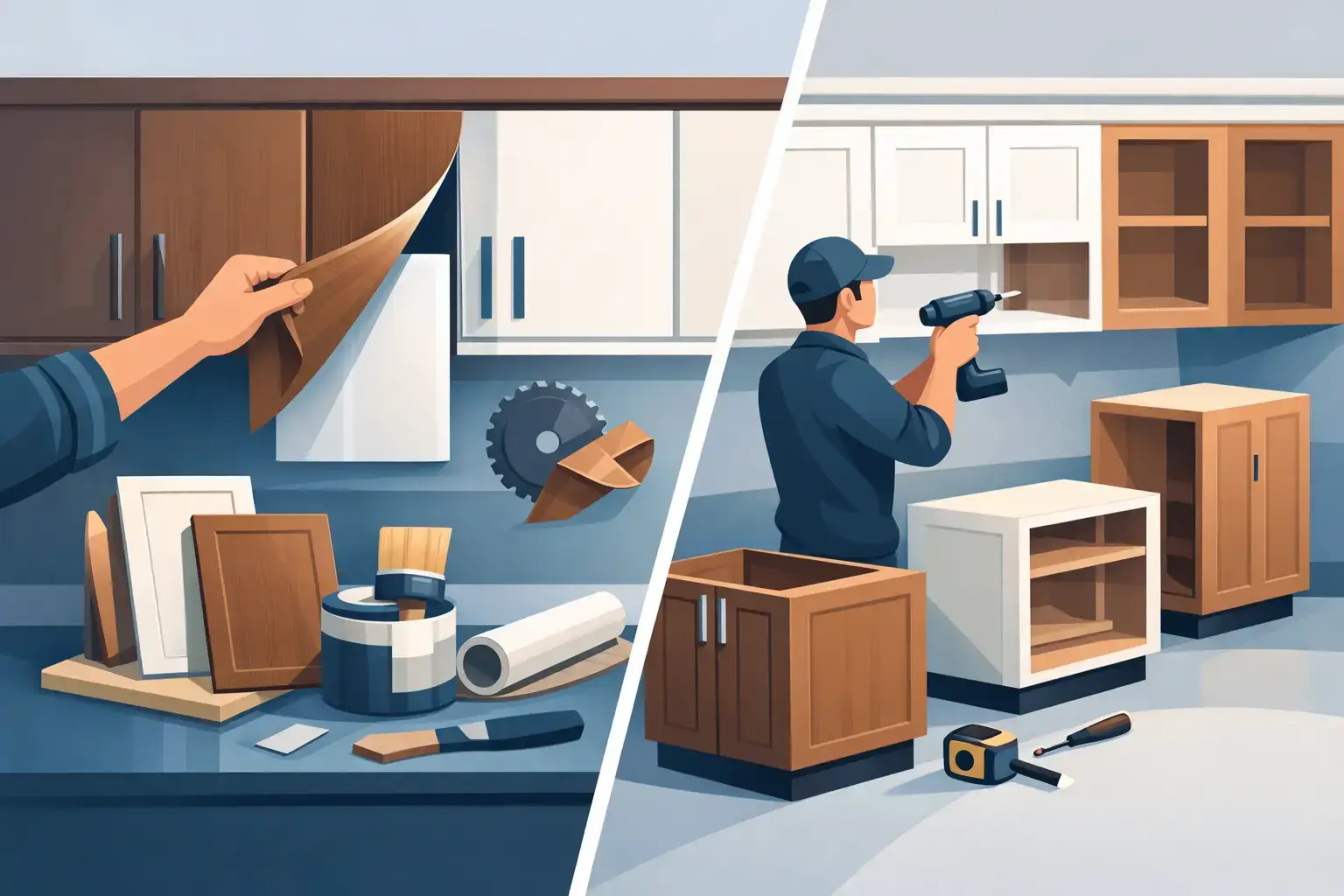
A lot of kitchens do not need to be torn out to feel new again. When homeowners start looking for cabinet refacing before after examples, what they usually want is proof – proof that dated oak, worn finishes, and older door styles can turn into a cleaner, brighter, more current kitchen without paying for a full replacement.
That is exactly why before-and-after results matter. They show what actually changes, what stays, and whether the finished kitchen still feels solid, functional, and worth the investment. For many homeowners in North Royalton and nearby communities, refacing makes the most sense when the cabinet boxes are in good shape and the layout already works.
What cabinet refacing really changes
A true before-and-after transformation is not just about swapping a few doors. Cabinet refacing keeps the existing cabinet boxes in place, then updates the visible surfaces with new doors, drawer fronts, and matching veneer or laminate on the exposed cabinet framework. New hardware is often part of the project, and details like crown molding, trim, or updated end panels can help complete the look.
The biggest visual shift usually comes from three things working together – door style, finish color, and hardware. An older raised-panel oak kitchen can look heavy and dark. Refacing that same kitchen with a shaker-style door in a painted white, soft gray, or warm wood tone changes the room fast. The footprint stays the same, but the kitchen reads as newer, cleaner, and more intentional.
That said, refacing is not magic. It does not move walls, create a new layout, or fix cabinets that are poorly built or damaged beyond repair. The best results happen when the bones of the kitchen are still good.
Cabinet refacing before after examples by kitchen type
Looking at cabinet refacing before after examples is most helpful when you can picture your own kitchen in the same situation. Not every project starts from the same place, and the right solution depends on what is outdated versus what is still working.
Example 1: Golden oak to painted shaker
This is one of the most common before-and-after changes homeowners ask about. The before kitchen usually has solid cabinets that were popular years ago but now make the room feel darker or more dated. The wood itself may still be in good condition, but the door profile, finish, and hardware show their age.
After refacing, the same kitchen often feels larger simply because the finish is lighter and the lines are cleaner. White shaker doors with brushed nickel or matte black pulls are a common choice because they brighten the room without changing the layout. If the countertops and backsplash are also updated later, the difference looks even bigger.
The trade-off is maintenance. Painted finishes tend to show dirt and wear more easily than some stained wood finishes, especially around handles and lower cabinets. For a busy family kitchen, the right paint color and finish level matter.
Example 2: Dark, heavy doors to a warm modern wood look
Not every homeowner wants white cabinets. Another strong before-and-after example is a kitchen with older dark doors or a reddish stain being refaced into a more current natural wood appearance. Think less orange, less shine, and a flatter, calmer grain pattern.
This kind of update keeps warmth in the room while making it feel more current. It works especially well in homes where all-white would feel too stark or where the homeowner wants the kitchen to blend with hardwood floors and other natural materials. The after result often looks more custom than people expect, especially when new end panels and trim are added.
The key here is coordination. A modern wood-tone cabinet front can still look dated if the countertop, wall color, or old ornate hardware is left untouched. Sometimes a small supporting update is what makes the refacing result look complete.
Example 3: Builder-grade kitchen with better details
Some before-and-after projects are less about rescuing old cabinets and more about upgrading a plain kitchen that never had much character to begin with. The cabinet boxes are functional, but the doors are flat, thin, or generic. The kitchen works fine, but it does not feel finished.
After refacing, these kitchens often benefit from added trim, crown, light rail, or decorative panels that give the cabinets more presence. New drawer fronts and better hardware can make the whole kitchen look more expensive than it was. This is where in-house fabrication and finish control can make a real difference, because details matter.
Example 4: Same layout, better flow visually
One of the biggest misconceptions in kitchen remodeling is that a kitchen only feels new if the entire layout changes. Many before-and-after examples prove the opposite. If the work triangle is already practical and storage is decent, keeping the same layout can save a lot of money and disruption.
In the before kitchen, the room may feel crowded because of darker finishes, bulky door profiles, or a mix of mismatched surfaces that have built up over time. In the after version, cleaner cabinet lines and a consistent finish make the room feel calmer and easier to use. Nothing major moved, but the visual noise is gone.
That matters more than people think. A kitchen that feels less cluttered often feels more enjoyable day to day, even if the square footage never changed.
What to look for in before-and-after photos
Not every set of photos tells the full story. Some make a project look bigger than it really was, while others skip over the practical details that matter most to homeowners trying to decide if refacing is worth it.
When you review cabinet refacing before after examples, pay attention to the cabinet box condition, not just the door style. If the original cabinet structure was solid, the after result should look integrated, not patched together. The finish should appear consistent across doors, drawer fronts, and exposed surfaces. That sounds basic, but it is where quality shows.
Also notice the details at the edges. End panels, crown molding, toe kicks, and exposed sides can make or break the finished look. A good refacing job should not leave old surfaces visible in places that make the update look incomplete.
Hardware placement matters too. New handles and pulls should fit the style of the doors and feel practical in daily use. A kitchen is not a showroom. It has to hold up to hands, spills, cooking, and cleaning.
When refacing gives the best before-and-after value
Refacing tends to offer the best value when homeowners like their current kitchen layout, want a strong visual upgrade, and do not want the price or mess of full cabinet replacement. That is why it appeals to so many practical homeowners across Northeast Ohio. They want the kitchen to look better and feel updated, but they also want common-sense spending.
The savings come from keeping what is still working. Existing cabinet boxes stay in place, which reduces demolition, labor time, and material costs. If the cabinet structure is still sound, replacing everything can be more than the project really needs.
Still, there are cases where refacing is not the right path. If cabinet boxes are weak, water-damaged, poorly laid out, or too limited for how the kitchen is used today, replacement may be smarter. Honest guidance matters here. The right company should tell you when refacing makes sense and when it does not.
Why workmanship shows up in the after photos
The difference between an average result and a really convincing one usually comes down to workmanship. Good materials matter, but fit, finish, and attention to detail matter just as much. Doors should hang evenly. Drawer fronts should line up cleanly. Veneers and matching surfaces should look intentional, not pieced together.
That is one reason many homeowners prefer working with a local company that handles the job directly instead of passing pieces of it around. When the same team controls fabrication, installation, and finish quality, there is more accountability from start to finish. For a family-owned company like Kitchen Perfect, that practical hands-on approach is part of what gives homeowners confidence.
Before-and-after examples should show more than a color change. They should show cleaner lines, better consistency, and a finished kitchen that looks built to last.
The real reason before-and-after examples matter
Most homeowners are not shopping for a dramatic reveal. They are trying to solve a real problem. They want to stop apologizing for an outdated kitchen. They want to enjoy the room again. They want something that looks better, works with their home, and stays within a reasonable budget.
That is why these examples matter so much. They show that a kitchen can change in a visible, meaningful way without turning into a major construction project. If your cabinets are structurally sound and your layout still works, refacing can be one of the smartest ways to get that change.
The best next step is not chasing the flashiest photo. It is looking closely at your own kitchen and asking a simple question: are the cabinets worn out, or are they just worn-looking? That answer usually points you in the right direction.