


Kitchen Cabinet Color Trends for Real Homes
- johng3100
- Jun 16
- 6 min read
If your kitchen still has solid cabinets but the color makes the whole room feel dated, you are not alone. A lot of homeowners looking at kitchen cabinet color trends are not chasing a magazine kitchen. They just want a space that feels cleaner, brighter, warmer, and more current without tearing everything out.
That is where color matters more than people expect. Cabinet color sets the tone for the whole room because cabinets take up so much visual space. Change the color, and you can change how the countertops look, how the floor reads, and even how big the kitchen feels. The right choice can make an older layout feel fresh. The wrong one can make a kitchen feel trendy for a year and tired after that.
What kitchen cabinet color trends look like right now
The biggest shift in kitchen cabinet color trends is away from stark, cold shades and toward colors that feel lived-in and easy to live with. Homeowners still want a modern look, but not something that feels harsh or sterile. In Northeast Ohio homes especially, that matters. Long winters and gray days can make an already cool kitchen feel even colder.
Warm whites are still strong, but they are not the bright, almost blue whites that were popular years ago. Today’s whites lean softer and creamier. They reflect light well, help a kitchen feel open, and work with a wide range of counters and backsplashes. For many homes, this is still the safest update because it looks clean without feeling too trendy.
Greige and taupe have also held their place. These shades give you a neutral cabinet color with more warmth than gray. They are practical for busy family kitchens because they hide minor dust, fingerprints, and everyday wear better than pure white. They also pair well with wood floors, black hardware, brushed nickel, and warmer stone patterns.
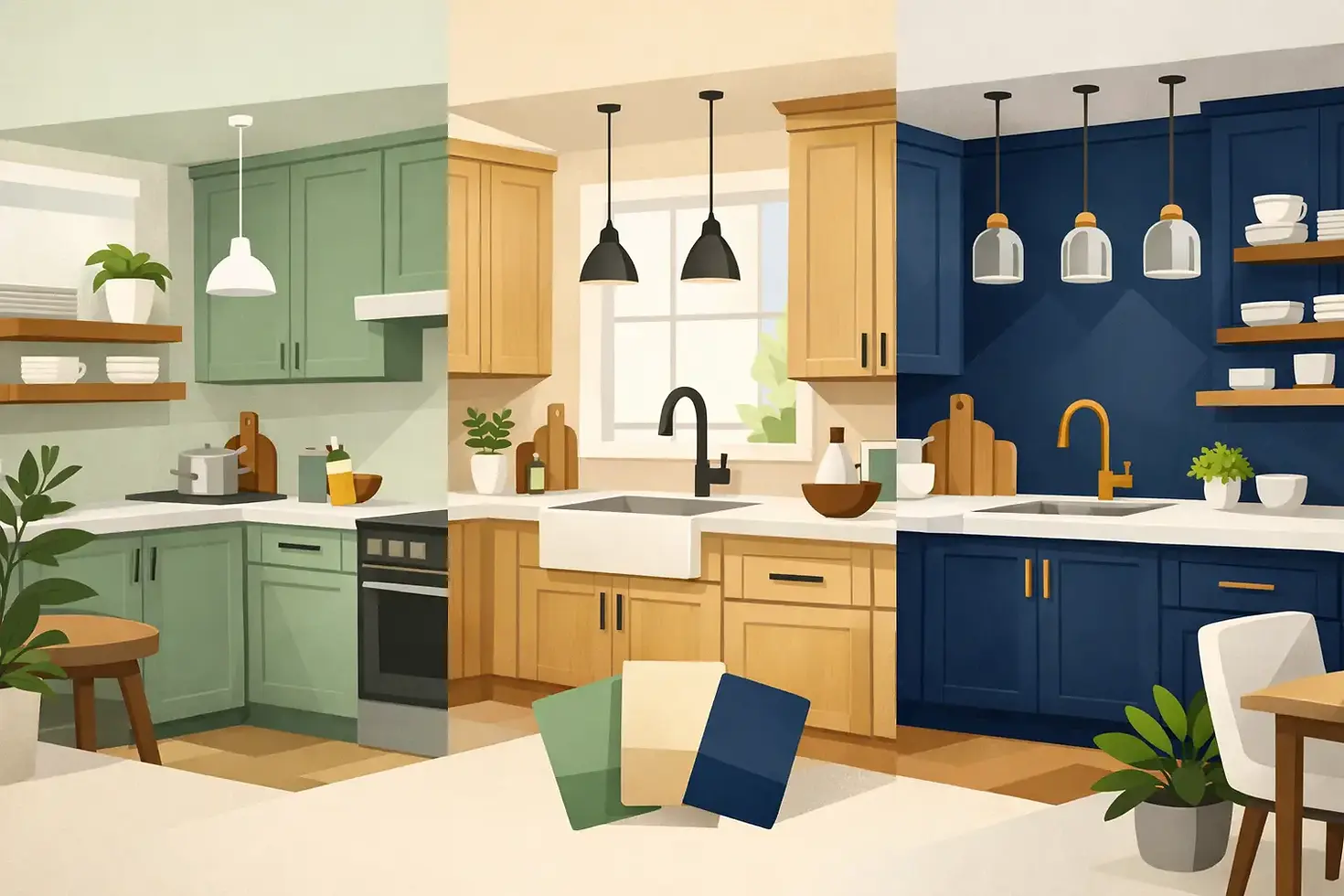
Deep greens have become one of the most requested bolder choices. Not every green works, though. The shades that hold up best tend to be muted sage, olive, or darker earthy greens rather than bright or overly saturated tones. These colors can bring character to a kitchen while still feeling grounded. They work especially well on an island or lower cabinets if you do not want to commit to a full kitchen of color.
Navy and deep blue are still around, but they have settled into a more selective role. A few years ago, blue cabinets were everywhere. Now they are used with a little more restraint. In the right kitchen, navy can still look sharp and timeless, especially with warm metal accents or lighter countertops. But in a darker room with limited natural light, too much navy can make the space feel heavy.
Wood tones are also back in a meaningful way. That does not mean the orange-toned oak look many people are trying to move away from. It means natural-looking stained finishes in medium or lighter tones that show grain and bring warmth back into the kitchen. For some homeowners, refinishing existing wood or mixing painted cabinets with a stained island offers a more lasting result than going fully painted.
Why warm colors are winning
A lot of current kitchen cabinet color trends come down to one simple thing. People want kitchens that feel comfortable. For years, the design world leaned heavily on cool gray. In some homes, gray still works. But in many kitchens, especially ones with limited daylight, heavy gray can flatten the room.
Warmer colors make the space feel more inviting. They also tend to work better with the materials many homeowners already have, such as beige tile, warmer granite, oak flooring, or earth-toned backsplashes. If you are updating cabinets without replacing every other surface, a warm cabinet color usually gives you more flexibility.
This is one reason off-white, mushroom, soft beige, putty, and muted green are getting attention. They do not fight with the existing room. They help bring it together.
The trend that makes the most sense for many homes
Two-tone kitchens continue to be popular, and this is one trend that often makes practical sense. Lighter upper cabinets keep the room feeling open, while darker lower cabinets or an island add depth and visual interest. It can also be a smart way to use color without overdoing it.
For example, white uppers with a deep green island can feel current without taking over the room. A soft greige perimeter with a stained wood island can bring in contrast and warmth. The benefit of this approach is balance. You get personality, but you still protect the kitchen from feeling too locked into one moment in design.
The trade-off is that two-tone kitchens need careful coordination. Countertops, flooring, wall color, and hardware all have to work together. If those elements are already busy, adding multiple cabinet colors can make the kitchen feel more crowded instead of more designed.
Choosing a cabinet color based on your kitchen, not just the trend
Not every trend belongs in every kitchen. That is the part homeowners sometimes miss when they see beautiful photos online. A cabinet color can look excellent in a large, sunlit kitchen and completely different in a smaller room with older lighting and lower ceilings.
Light matters first. If your kitchen gets limited natural light, very dark cabinets may not give you the result you want. They can look rich and elegant, but they can also close in the room. In that case, softer neutrals or warm whites may give you a better payoff.
Existing finishes matter too. If you are keeping the countertop, backsplash, or floor, the cabinet color has to respect what is staying. A cool white can clash with warm granite. A trendy green might not sit right next to red-toned flooring. This is where practical design beats trend chasing every time.
Then there is maintenance. White cabinets show splatter and smudges sooner. Dark painted cabinets may show dust and scratches more clearly. Mid-tone colors often land in the sweet spot for homeowners who want an updated look without constant upkeep.
Painted cabinets versus stained finishes
One of the most overlooked parts of cabinet color is deciding whether paint is really the best path. Paint gives you the biggest visual change, and for many kitchens it is absolutely the right choice. It can modernize dated cabinetry quickly and make the whole room feel brighter.
But stain still has a place. If the cabinet door style works and the wood is in good shape, a stained finish can look classic and current when the tone is updated. Natural wood brings warmth that paint cannot fully copy. It also tends to age more gently because wear can be less obvious than on painted edges and corners.
This is where homeowners benefit from working with an experienced local company that understands refacing, refinishing, and replacement options instead of pushing one answer for every kitchen. Sometimes a full color change is best. Sometimes a smarter move is keeping wood in the design and updating the finish around it.
Finish matters almost as much as color
The same cabinet color can look completely different depending on the finish. Most homeowners today lean toward low-sheen or satin finishes because they give a clean look without every fingerprint shouting for attention. High gloss can feel too slick for many traditional or family kitchens. Flat finishes can be harder to keep looking clean.
Hardware also changes how a color reads. Black pulls can sharpen up a soft neutral. Brass or warmer metals can make green, taupe, and off-white cabinets feel more inviting. Even the wall color around the cabinets can push the cabinets warmer or cooler, so samples should always be viewed in the actual kitchen and at different times of day.
What tends to hold up best over time
If your goal is resale, longevity, or just avoiding another update in a few years, the best cabinet colors are usually the ones that feel current without trying too hard. Warm whites, soft neutrals, muted greens, and natural wood tones tend to have staying power because they fit a wide range of homes and styles.
That does not mean you have to play it safe to the point of being boring. It just means the smartest color choices usually have some restraint. A dramatic color can work beautifully, especially as an accent. For an entire kitchen, most homeowners are happier long term with a shade that feels fresh but still easy to live with.
For many families in North Royalton and nearby communities, the right cabinet color is the one that makes the kitchen feel better every day without forcing a full remodel budget. That is why kitchen cabinet color trends are most useful when you treat them as a starting point, not a rulebook. Good color should fit your home, your light, your budget, and the way you actually use the room.
If your cabinets are still functional, a well-planned color update can do more than follow a trend. It can make the busiest room in the house feel like it belongs to you again.


Comments